Speaking Shiqip
Did you know that Shiqip (Albanian) has its own branch in the Indo-European language tree?

This past December, I was chatting at a Christmas party about my upcoming trip. I’m the first to blab to anyone about Albania, which is how I wound up learning fun facts about the language from a young man who majored in linguistics in college.
“Albanian is unlike any other language in Europe, in that it isn’t related to any other language,” he said.
“Neat,” I said. “I’ve been trying to learn Spanish for thirty years. Hola.”
We talked a bit more before parting.
“You’re going to have a wonderful trip,” he said. “I can feel it.”
Nice guy at the party has been 1000% correct!
Most people I talked to said I shouldn’t worry about trying to learn Albanian. Albanian is too hard, they said. Only Albanians speak Albanian, so they all speak English, especially if they are young. I respectfully say these people were wrong, and I wished I’d found the time to learn a few phrases before I came here.
When Rose Wilder Lane hiked the Albanian Alps, she brought a translator. Her method when quoting Albanians in The Peaks of Shala is to write: “‘Blah, blah, blah, blah, blah,’ he said in Albanian.'’ She doesn’t pepper any Albanian words or phrases in dialogue in the text, or attempt to describe the language.
Rose and her companion, Helen Boylston, attended a Berlitz School in Paris before driving to Albania. The Berlitz Method (more immersion, less grammar), founded in 1878, is the OG Duolingo. Although Rose drops that she became fluent in Albanian, anyone who has tried to learn a language in a few weeks knows this fluency must be one of Rose’s exaggerations. We won’t become magically fluent in other languages until we can enter The Matrix and download microchips into our brain.

In her journal, “My Albanian Garden,” Rose writes about having to bring in a translator after her “faltering Albanian” is insufficient for explaining how she wants curtains to the girl who will sew them. Later, while kvetching about her lack of productivity — a common Rose kvetch — she writes, “But I really should be learning Albanian, especially for my beloved dream book, The Cave of Bulqis.”
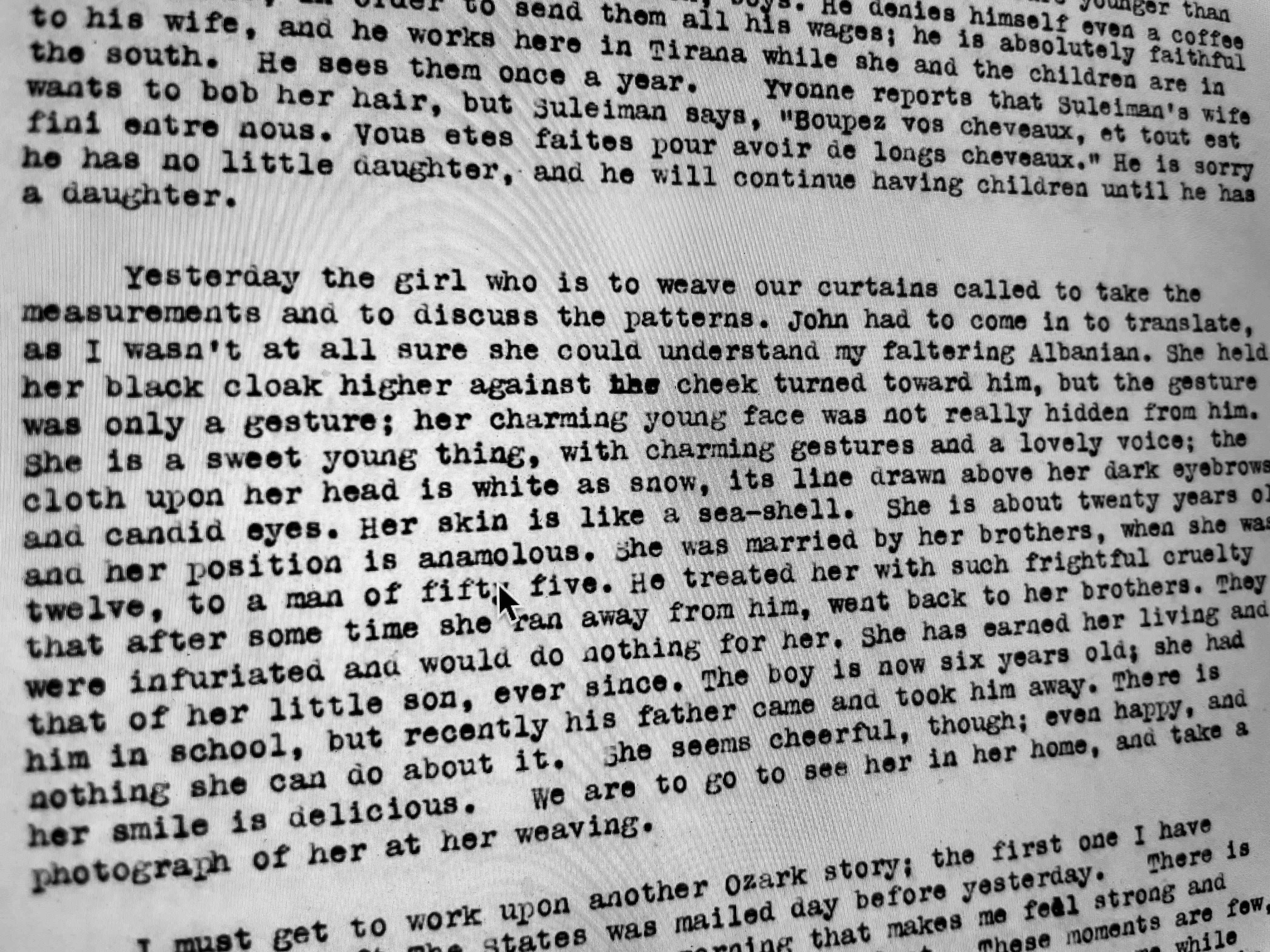
Rose never published this novel, the first of what she hoped would be a trilogy. I have said it before and will say it again, Rose only complained about her lack of productivity because she was insanely prolific. Only insanely productive people berate themselves for not finishing a trilogy in two years.
When she returned to Missouri she (famously) threw her considerable energy into helping her mother, Laura Ingalls Wilder, write the Little House books.
I’m guessing she never did become fluent in Albanian, finding little occasion to practice in Missouri.
Modern-day journalist and British ex-pat Alice Taylor has dedicated herself to learning Shiqip. Taylor turned a random three-day holiday into a permanent move; and even has Albanian citizenship now. She recently published a travel book, Alice in Albania: 250 Adventures.
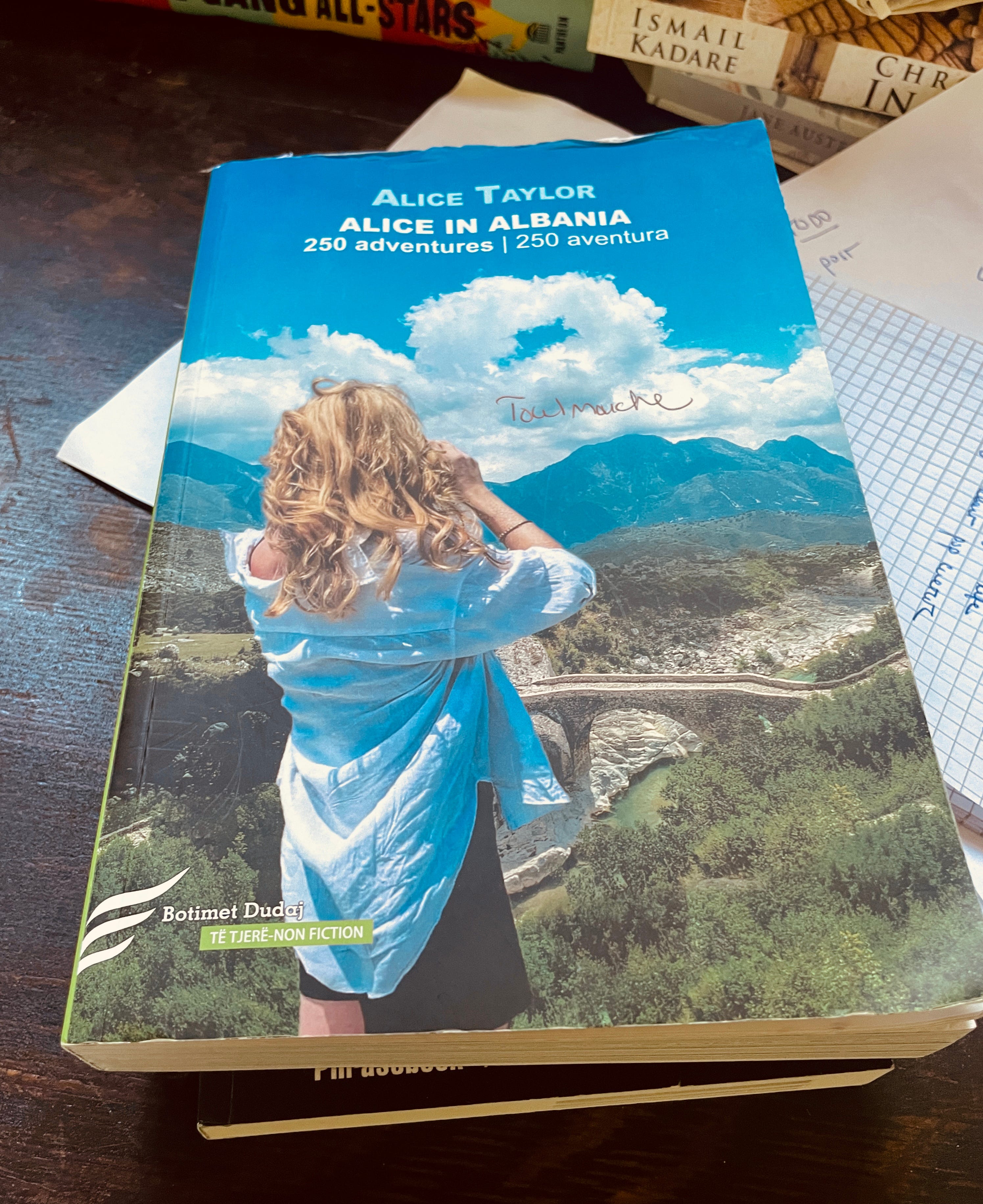
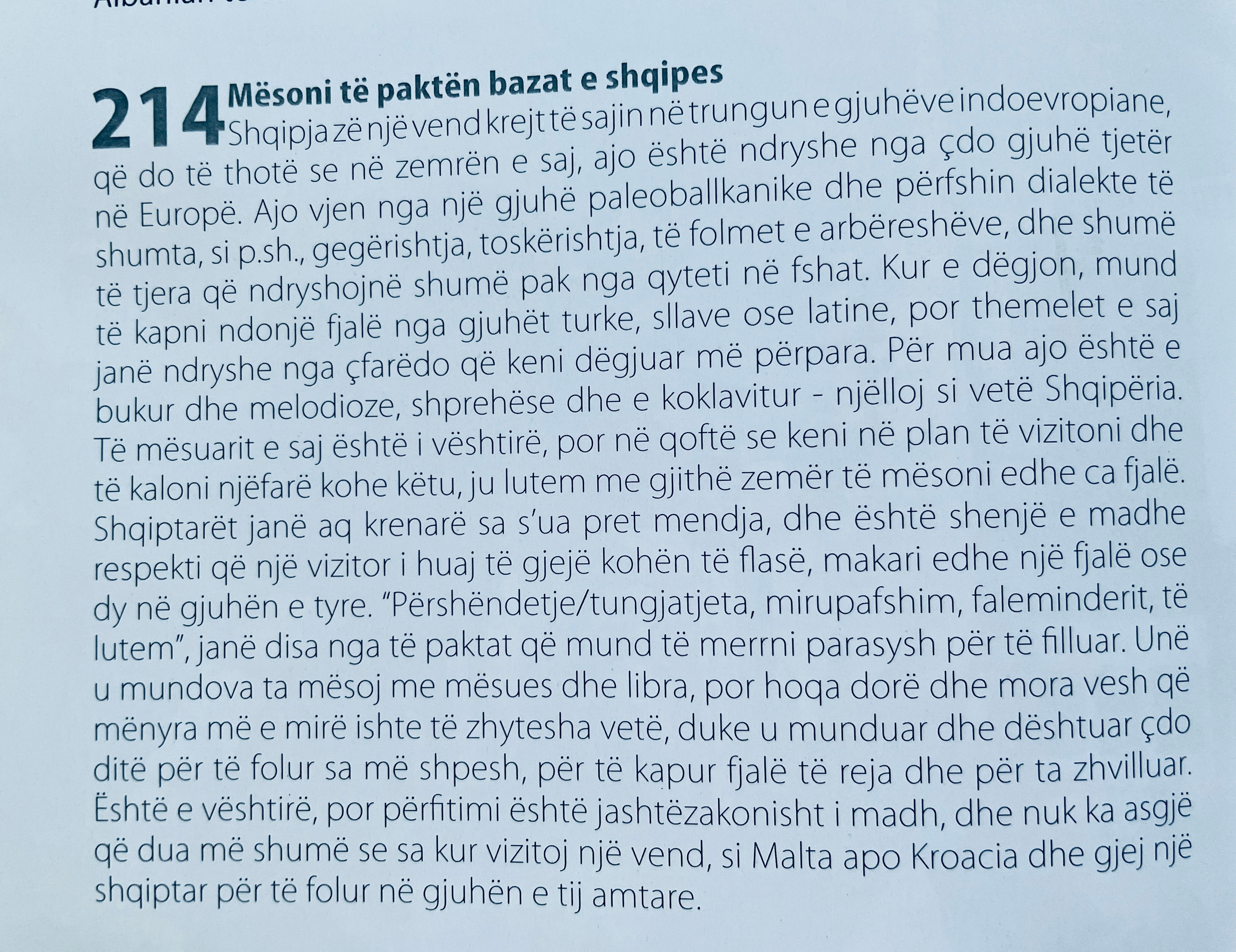
Adventure 214 in Alice’s book is, Learn at least the basics in Albanian, or Mësoni të paktën bazat e shqipes. For every adventure, she writes the copy in both English and Shiqip.
Alice is my kind of travel guide, which means while acknowledging the value of certain touristy things, she prioritizes curiosity and exploration. Her book has the best tips (longer review to come). Alice hits the right note between aspirational and doable; the book works as an armchair read and/or a guide.
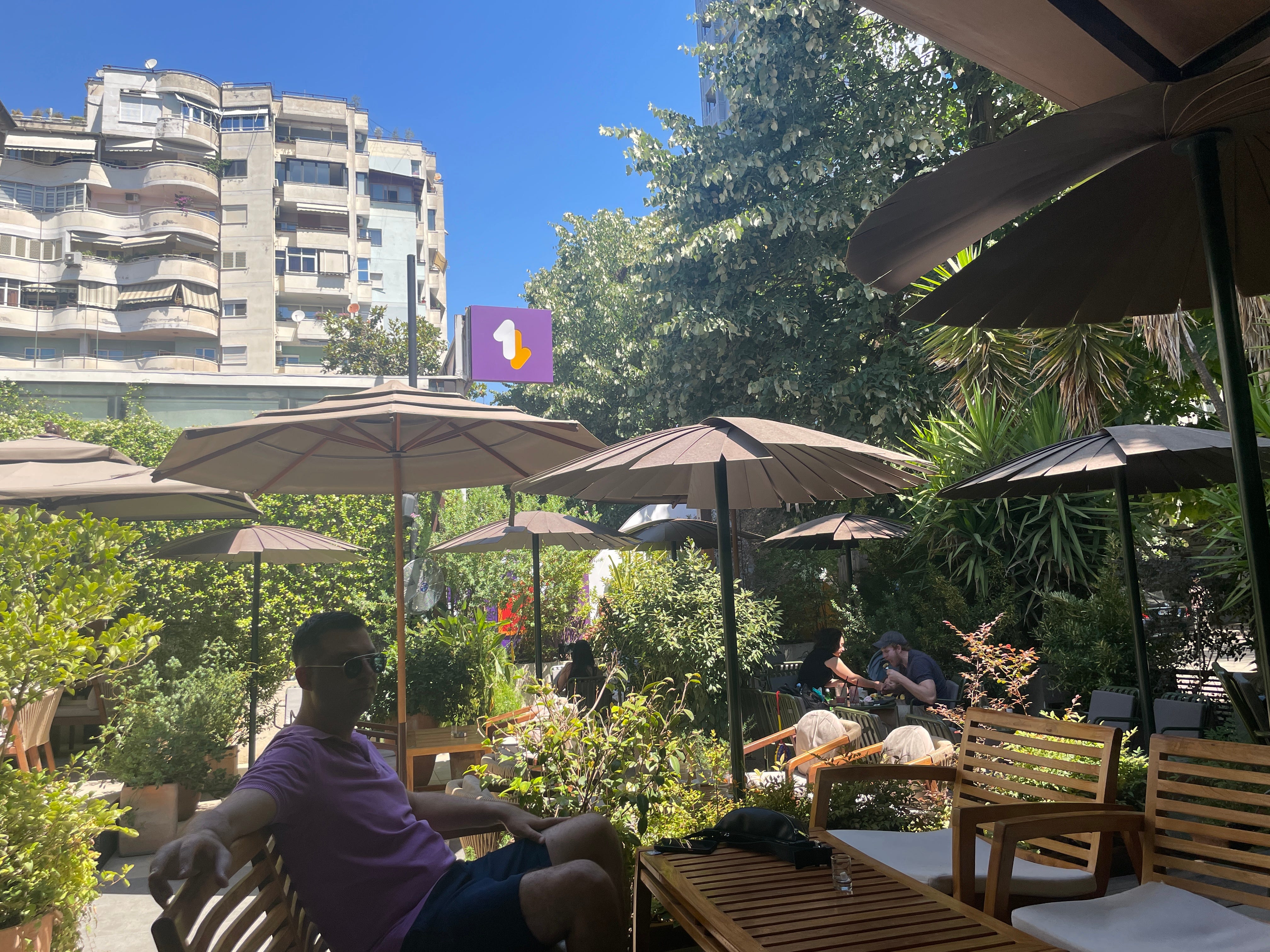
The best way to experience the language would be to sit in one of Triana’s many shaded coffeehouses in the summer, get high on Linden trees blooms, and listen. Albanians love to gab.
Albanian is one of the coolest languages I’ve ever heard, soundwise. Alice describes it as, “beautiful and melodic, expressive and complex, much like Albania itself.” Nothing irritates me more an earsplat of English killing the vibe, a language that sounds so flat and drab by comparison.
As for getting around, signs are often in Albanian and English, handy for knowing if a store sells donuts or repairs watches. Albanian uses the same alphabet as English, the Latin alphabet with the addition of the letters ⟨ë⟩, ⟨ç⟩, and ten digraphs: dh, th, xh, gj, nj, ng, ll, rr, zh and sh. With that basic ABC to work with, you’ll recognize words. Fruit is frut, second is sekondë, etc. But “thank you” (falemindarit) will take two weeks.
You’ll get around with English, which has become the common language for Europe, especially as the bridge between Eastern and Western Europe. But you won’t be able to engage in conversation, especially if the Albainan grew up before the fall of the communist regime in 1991.
If you hope for a real Albanian smile (Albanians aren’t smiley like Americans), Alice is right, a few phrases go a long way. You can’t understand a people until you at least try to understand their language. And nothing wrong with enjoying a coffee while you’re at it.